
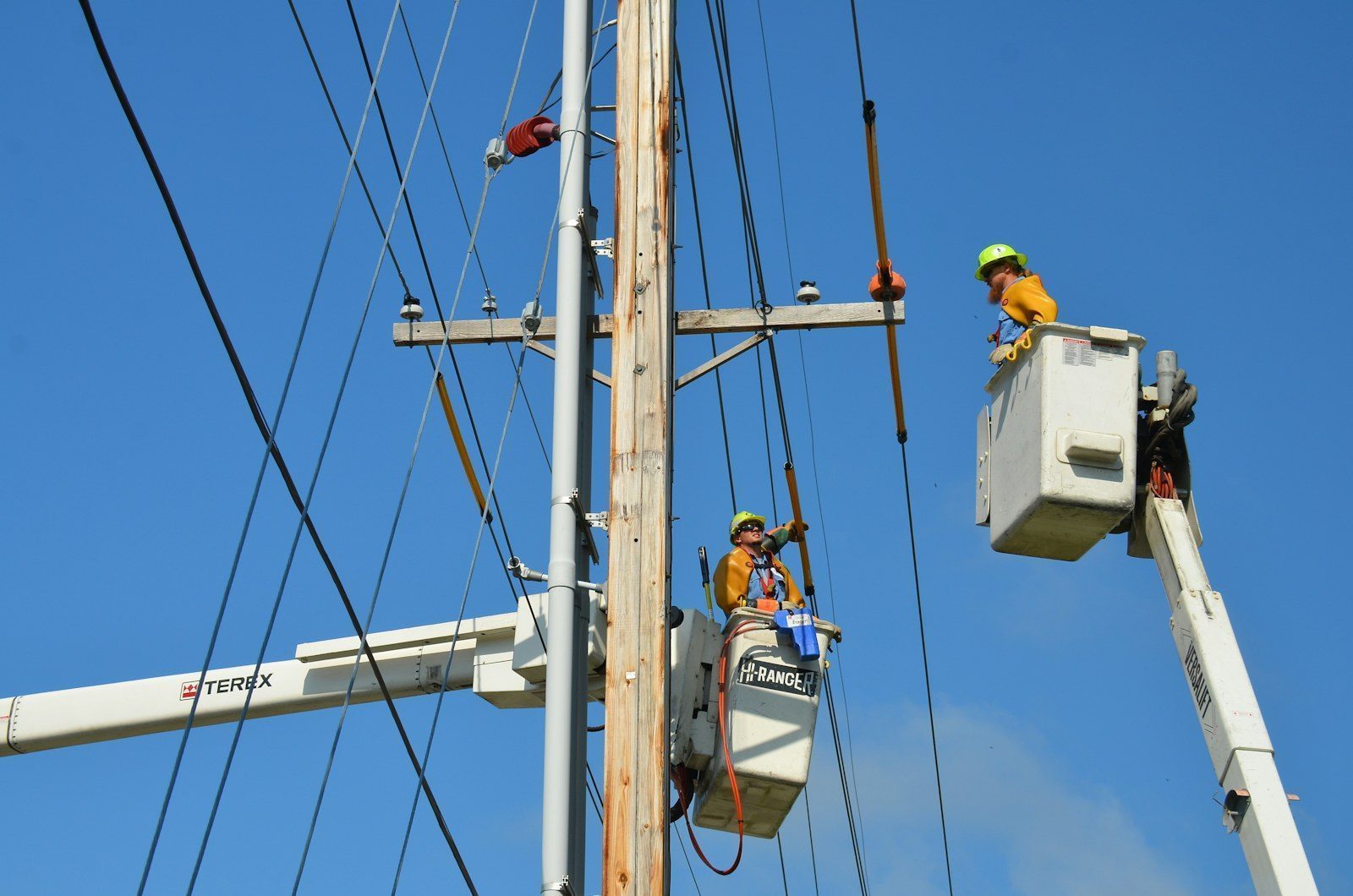
Define the work before selecting coverage
Overhead and underground distribution, pole setting, cable installation, transformers and switchgear. Identify transmission, substation work and vegetation operations separately.
Exposures to examine
- Electrical contact and arc exposure
- Falls from elevation
- Vehicle and equipment collisions
- Transformer oil releases
Contract and project considerations
List every routine and anticipated storm-response state. Review utility indemnities, completed operations, additional insured requirements and property being worked on. Distribution experience does not automatically establish eligibility for transmission work.
Prepare a useful underwriting submission
- Nominal and maximum voltage
- Energized versus de-energized work percentages
- Rubber-glove and hot-stick methods
- Storm states, crew experience and utility contracts
Geography, workforce and project structure
List the states and utility customers served, distinguishing overhead, underground, energized and de-energized operations. Identify employee, mutual-assistance and subcontractor crews, payroll by state, equipment and contract values, and bring policies and loss runs before discussing new service territories or storm assignments.
Sources & further reading
Reference review: October 27, 2026 · Content owner: Montridge Insurance Services, Inc.
Official references support their stated regulatory or educational topics. They do not verify policy terms or a particular contractor’s compliance.